 Skip to content

Karnavedha Sanskar: The Ultimate Guide to Baby’s Ear Piercing Ceremony
- Written by Riddhi Sharma
- 3 min read
- Expert Medically Reviewed by Dr. Urvi Ashani, M.Pharm (Ayurveda), Ph.D | R&D Head, BabyOrgano | 13+ Years Experience in Pediatric Ayurvedic Care
Table of Contents
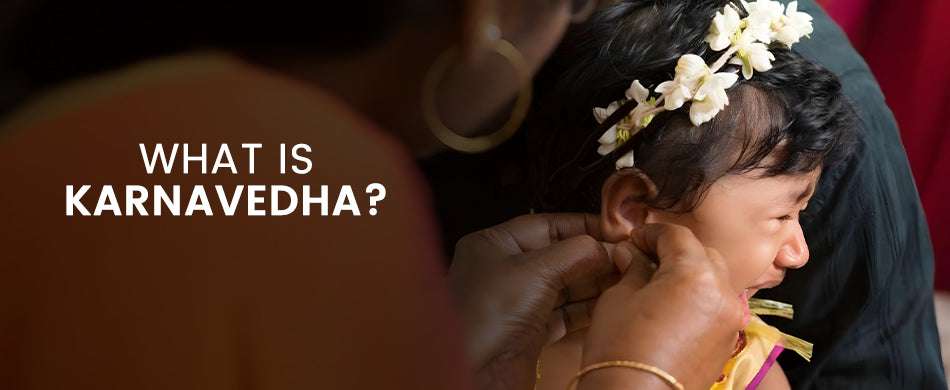
What is Karnavedha?
The basic karnavedha meaning comes from two sacred Sanskrit words: Karna, meaning ears, and Vedha, meaning piercing or penetrating. Together, they explain the concept of karnavedha ear piercing in children. If you look up the ear piercing ceremony, it is widely recognized as Karnavedha Sanskar (also spelled karnavedh sanskar or karnvedh sanskar). It represents the 9th major sacrament among the Shodasha Samskaras (the 16 essential life-cycle milestones) prescribed in Sanatana Dharma.
For parents wondering what is ear piercing ceremony called across different regions of India, it goes by many names. In Hindi, it is known as kanchhedan, kanchhedan sanskar, or kanchedan sanskar (colloquially termed kaan chidwana, kan chedna, or kaan chedna). In Southern India, it is passionately celebrated as the kathu kuthu function, kathukuthu ceremony, or ear boring ceremony. No matter the regional term, this ear piercing ritual in hinduism is an obligatory rite of passage intended for both boys and girls. It marks a child’s transition into formal sensory and cognitive development, purifying their mind and body.
Why Celebrate the Karnavedha Ceremony?
Every milestone in the Vedic tradition balances spiritual evolution with practical anatomy. The classical text Sushruta Samhita explicitly states that an ear piercing ceremony in hindu tradition is called a protective rite performed for two core reasons: Raksha (systemic protection against diseases) and Karna-bhushana (ornamental adornment).
Understanding the true piercing ceremony meaning requires looking closely at the importance of ear piercing in hinduism:
Brain Development & Intellectual Growth
The central lobe of the ear contains vital nerve paths connecting the left and right hemispheres of the cerebrum. When this exact location is micro-stimulated during traditional ear piercing for babies, it helps activate the brain’s neural networks. This natural ear piercing sanskar boosts memory, sharpens intellect, and expands a child's learning capacity.
Sensory Sharpening (Hearing & Vision)
Vedic sages noted that the natural point where light filters through the central earlobe is the Daivkrit Chhidre (the divinely created space). Piercing this precise locus acts as a localized acupuncture node. Regular contact with pure metal at this spot stimulates optical nerves, helping protect the child's eyesight while optimizing physical hearing capacity.
Reproductive & Endocrine System Regulation
The acupressure channels within the earlobes directly influence the body's reproductive meridians. For an ear piercing ceremony for girl infants, early piercing balances the development of feminine energy, stabilizing hormones and helping to regulate future menstrual cycles. For an ear piercing ceremony for boy infants, classical karnavedha benefits link lobe stimulation to the prevention of congenital conditions like hydrocele and abdominal hernias.
Spiritual Protection & Energy Flow
Metaphysically, a hindu ear piercing ceremony opens the "inner ears" to process cosmic vibrations and internalize sacred audio frequencies, like Vedic chants. The physical placement of gold or copper earrings also acts as an energetic conductor, regulating the flow of electric current and building an auric shield against astral imbalances (Graha Doshas).
Favorable Timing and the Vedic Rules
To draw the maximum biological advantage from this ear ceremony, parents must follow traditional principles regarding age, days, and anatomical orientation:
- The Ideal Karnavedha Sanskar Age: Both Acharya Sushruta and Acharya Vagbhata advocate performing this ear piercing ritual during infancy—specifically in the 6th, 7th, or 8th month after birth. At this stage, the baby's ears are thin, soft, and highly pliable, minimizing pain and accelerating natural tissue healing.
- The Odd-Year Rule: If the karnavedha ceremony is not performed during infancy, Vedic numerology recommends holding the ear boring function during the child's 1st, 3rd, or 5th year. Odd years symbolize organic expansion, health, and solar longevity.
- The Gender Protocol: The initial side pierced depends strictly on the child's gender to align correctly with natural biological polarities:
For Boys: The right ear is pierced first, which is the standard rule for karnavedha sanskar for boys. This aligns with the solar, masculine Pingala energy channel.
For Girls: The left ear is pierced first, aligning with the lunar, feminine Ida energy channel.
Astrological Timing: Best Day for Ear Piercing
Parents often ask: on which day ear piercing is done safely? Or can we do ear piercing on saturday? According to Vedic astrology, Saturdays and Tuesdays are governed by Saturn and Mars, which are sharp, aggressive energies generally avoided for gentle sacraments. To get the best results, look for a favorable kanchedan muhurat or karnavedha muhurat 2026 on auspicious days like Thursdays, Fridays, Sundays, or Wednesdays. The ritual is strictly avoided during eclipses or Kharmas (unfavorable solar months).
How is Karnavedha Performed?
Every step of the baby ear piercing ceremony follows a structured, spiritual sequence to keep the infant comfortable and spiritually protected:
- Auspicious Muhurat: A family priest analyzes the child's birth chart (Janma Kundali) to isolate a favorable time. The ear piercing function is conducted under protective constellations (Nakshatras) such as Mrigashira, Revati, Chitra, Anuradha, Hasta, Ashwini, or Pushya.
- Purification & Attire: On the morning of the earing ceremony, the child is given a sacred bath and dressed in rich, traditional new clothes.
- Samskara Homa: Families gather at a local temple or a beautifully decorated home altar for the earrings ceremony. The priest conducts an Ayush Homa (fire ritual for life longevity) and sprinkles consecrated Kalasa water over the baby while chanting specialized wellness mantras.
- The Safe Seat: The baby is placed directly on the lap of an elder—traditionally the maternal uncle (Mama), mother, or paternal aunt—to provide warmth, stability, and reassurance during the ear piercing function in english cultures.
- The Sacred Piercing: Facing east toward the morning sun, a trained goldsmith or medical professional swiftly performs the traditional ear piercing. A fine wire or stud made of pure gold or silver is immediately inserted to keep the tract open. Natural, cooling oils (like neem or coconut oil mixed with turmeric) are applied instantly to soothe the skin.
- Feast & Blessings: Elders shower the little one with toys, sweet treats, and gifts. The earring ceremony closes with a festive vegetarian community feast (Mahaprasad) shared with relatives and loved ones. Often, families choose to combine this milestone with the first haircut, hosting a joint tonsure and ear piercing ceremony to celebrate both transitions together.
Modern Medical Safety & Aftercare Guidelines
To preserve the beautiful intent of the indian ear piercing ceremony while minimizing any physical distress for your baby, modern pediatric care stresses incorporating sterile medical safeguards [via Wikipedia's Samskara Resource Platforms]:
- Sterile Needles Over Piercing Guns: Avoid spring-loaded piercing guns often found in commercial jewelry shops. These guns cannot be placed in a medical autoclave and cause blunt force trauma to fragile tissue. Insist on a trained professional or a pediatrician using a single-use, sterile hollow medical needle for the piercing ceremony.
- Hypoallergenic Metallurgy: The baby's first earrings for the baby earrings ceremony should be made exclusively of Medical-Grade Titanium, Niobium, or 24K Pure Gold. Avoid base alloys, nickel, or unrefined brass, which frequently trigger acute contact dermatitis or keloids in infants.
- Rigorous Aftercare: Leave the initial studs untouched in the lobes for a minimum of 6 consecutive weeks to allow the inner skin tube to heal completely. Clean the area gently twice a day using a sterile saline wash, keep the earlobes completely dry after baths, and avoid tight-fitting clothing that could snag the jewelry.
Wrapping Up
The karnavedha ear piercing ritual is a deeply purposeful, health-enriching tradition that extends far beyond aesthetics. By choosing the correct auspicious day, understanding the biological benefits of Ayurvedic acupressure points, and using sterile, modern tools, we can keep this beautiful ear punching ceremony both safe and sacred. Let us preserve our rich cultural roots by surrounding our children with love, protection, and conscious parenting.
- Tags:
- Ayurveda
- Parenting tips


