 Skip to content

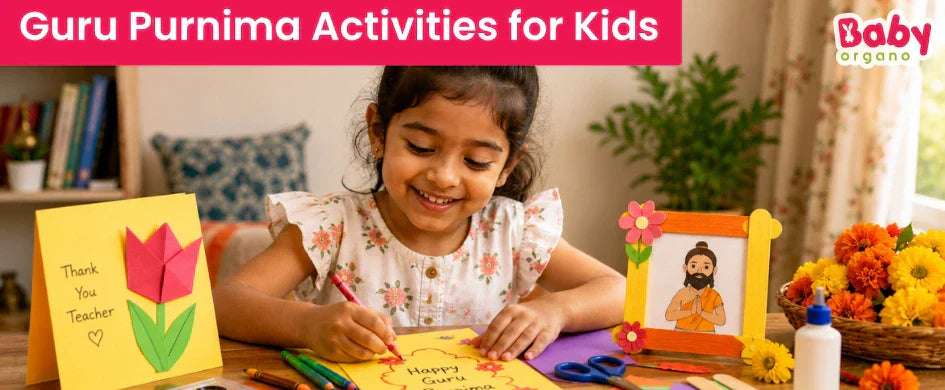
Guru Purnima Activities for Kids: Crafts, Games & Gift Ideas
Table of Contents
What Is Guru Purnima and Why Do We Celebrate It?
Guru Purnima is a day dedicated to thanking our gurus, teachers and mentors, basically anyone who has taught us something valuable in life. The word "Guru" comes from two Sanskrit words, "Gu" meaning darkness and "Ru" meaning the one who removes it (a person who clears confusion). So a guru is someone who takes away ignorance and brings in knowledge.
The day itself goes back to the sage Vyasa (an ancient Indian scholar and writer), who is believed to have been born on this very full moon day. Vyasa is credited with writing the Mahabharata and organising the Vedas (India's oldest sacred texts) into four parts, making knowledge easier for people to learn and pass on. Because of the immense wisdom he gave the world, people began celebrating this day to honour him and, over time, to honour all teachers and gurus who guide us the same way. That's why Guru Purnima is also called Vyasa Purnima, and why it became a day to honour teachers who guide us the way Vyasa guided generations through his work. Buddhists mark this day too, remembering it as the day Buddha gave his first sermon (his first teaching to followers) after gaining enlightenment.
For kids, this doesn't have to mean spiritual gurus only. Their guru could be their school teacher, their dance instructor, their mother & father who taught them to ride a cycle, or even their grandparents. Explaining this to your child in simple words helps them understand why the day matters, without turning it into a boring history lesson.
Quick Facts about Guru Purnima
Guru Purnima falls on the full moon day (Purnima) of the Ashadha month, which usually lands in July.
Guru Purnima 2026 Date: Wednesday, 29 July 2026
Guru Purnima begins at 6:18 PM on July 28 and ends at 8:05 PM on July 29. The most auspicious time for morning worship is from 05:41 AM to 09:05 AM.
A quick fact for curious kids: This day is also called Vyasa Purnima, named after the sage Vyasa who is believed to have compiled the Vedas (India's ancient sacred texts). Buddhists also observe this day to mark Buddha's first sermon (his first teaching to followers). One festival, many stories, one common thread of gratitude.
Guru Purnima Activities for Kids, Sorted by Age
Not every activity suits every age. A 2 year old cannot sit through a card making session, and a 10 year old will get bored coloring a basic worksheet. Here's how to break it down properly.
For Toddlers (2 to 4 years)
1. Handprint art where they dip their palm in paint and press it onto paper to make a simple flower or tree.

Sit with your toddler at a table and let them dip their little palm in bright, washable paint. Press it firmly onto a plain sheet of paper to leave a handprint, then turn that print into a flower by adding a stem and a few leaves with a sketch pen once it dries. Or flip the handprint upside down and it turns into a simple tree shape too. This works best as a parent and child activity since toddlers this age need help with the paint and the pressing part. It takes barely 10 minutes, keeps them engaged.
2. Simple picture books about teachers or family, read aloud together.

Pick a few picture books at home that talk about teachers, school or family bonds, and set aside 10 to 15 minutes to read them out loud with your toddler. Sit together, let them point at the pictures and ask questions along the way, and use fun voices for different characters to keep them hooked. This works best as a parent and child activity since toddlers enjoy books more when someone is reading with them rather than alone. You can even pause on a page about a teacher and gently explain how their own teacher helps them learn new things every day, tying it back to what Guru Purnima is really about.
3. A "thank you" video message recorded on your phone where they wave and say thank you to their favourite teacher.

Stand your toddler in a well lit spot at home and simply record a short 10 to 15 second video on your phone where they wave and say a happy "thank you" to their favourite teacher. You can help them along by asking simple questions like "who taught you your rhymes" or "who do you love at school" to get them talking naturally instead of forcing a script. Once it's ready, you can share the video with the teacher directly or play it during a small family celebration at home. It's a simple gesture that ends up meaning a lot more than it takes to make.
For Preschoolers (4 to 6 years)
1. Colouring pages with a guru or teacher theme.

Print out a simple guru or teacher themed colouring page, or draw a basic outline yourself if you don't have a printer handy, and let your preschooler sit at a small table with a set of crayons or sketch pens. Give them the freedom to pick their own colours rather than correcting them, since the goal here is enjoyment, not perfection. Once done, you can help them write "Happy Guru Purnima" at the bottom and turn the coloured page into their first handmade gift for their teacher.
2. Simple sticker cards where they just need to paste and decorate.

Keep a plain blank card ready and a few sheets of colourful stickers, flowers, hearts, stars, anything bright works, and let your preschooler stick them on however they like. There's no right or wrong way to do this, which makes it perfect for kids who aren't ready for cutting or gluing yet. Once the card is nicely decorated, write a short "Happy Guru Purnima" message on it yourself or help them scribble it, and it's ready to be handed over to their favourite teacher.
3. A short rhyme or two line thank you message they can memorise and say out loud.

Pick a simple two line message like "Thank you teacher, so kind and true, all that I know, I owe to you" and practice it with your preschooler a few times over the day, breaking it into small chunks so it's easier to remember. Say it together first, then let them try it alone once they're comfortable, clapping or cheering a little to keep it fun rather than making it feel like homework. Once they've got it down, they can say it out loud to their teacher on Guru Purnima, and trust us, a confident little voice reciting a heartfelt line leaves a bigger impression than any store bought card ever could.
For School Kids (7 years and above)
1. Card making with actual folding, cutting and writing.

Give your school going child a sheet of coloured paper or an old greeting card, a pair of blunt tip scissors, glue and sketch pens, and let them fold the paper in half to form the base of the card. Guide them through cutting simple shapes like hearts or flowers, pasting them onto the front, and writing a short personal message inside in their own handwriting. Once finished, they'll have a card that's genuinely theirs from start to finish, and that little sense of pride is exactly what makes it special for both the child and the teacher receiving it.
2. Writing a short thank you note or a small paragraph on their favourite teacher.

Hand your child a plain sheet of paper or a notebook page and ask them to think of one or two things their teacher does that they're grateful for, then help them turn it into a short 3 to 4 line note or paragraph in their own words. Encourage them to write it themselves rather than dictating it word for word, since the little imperfections in a child's own writing are what make it feel real. Once it's done, they can either hand it directly to their teacher or tuck it inside a handmade card, either way it becomes a small piece of writing their teacher will likely keep for years.
Keeping activities age appropriate means less frustration for your child and honestly, less mess for you too.
Guru Purnima Craft Ideas for Kids to Make at Home
1. Paper Plate Guru Face Craft

Materials: a paper plate, crayons or paint, glue, wool or yarn for hair.
Steps:
- Let your child paint or colour the plate as a face.
- Stick yarn on top as hair.
- Draw or paste paper cutouts for eyes, nose and a smiling mouth.
- Write "Thank you Guru Ji" at the bottom.
2. Handprint Tree of Knowledge

Materials: brown and green paint, white paper, a paintbrush.
Steps:
- Paint a simple tree trunk using a brown handprint.
- Dip fingers in green paint to make leaves around the trunk.
- Once dry, write "You helped me grow" near the tree.
3. Quilled Paper Flower Card

Quilling (rolling thin paper strips into shapes) sounds fancy but it's actually simple once you try it.
Materials: coloured paper strips, glue, a pencil or toothpick, a blank card.
Steps:
- Roll a paper strip tightly around the pencil to form a coil.
- Pinch one side to shape it like a petal.
- Make 5 to 6 petals and glue them together to form a flower.
- Stick the flower onto the card front.
4. Thank You Bookmark

Materials: thick paper or old greeting cards, ribbon, sketch pens.
Steps:
- Cut a rectangle strip of card.
- Decorate with drawings or stickers.
- Punch a hole at the top and tie a small ribbon.
- Write a short note like "Thanks for teaching me".
5. Popsicle Stick Guru Frame

Materials: popsicle sticks, glue, paint, a small photo of the teacher (optional).
Steps:
- Arrange 4 sticks into a square frame and glue the corners.
- Paint or decorate the frame once dry.
- Stick a small drawing or photo inside.
6. Origami Flower Card

Origami (paper folding art) flowers look complicated but the basic tulip fold is genuinely easy for kids above 6.
Materials: square coloured paper, a blank card, glue.
Steps:
- Fold the square paper diagonally to form a triangle.
- Fold the two bottom corners up to the top point.
- Tuck one flap inside the other to lock the shape.
- Glue the finished flower onto the card.
A quick note here, always sit with your child during the cutting and gluing steps. It keeps things safe and honestly, it's the part they enjoy most anyway, doing it together with you.
What to Write Inside Guru Purnima Greeting Card?
The part kids always get stuck on, what to actually write inside. Keep it short and from the heart. Here are a few lines your child can use or tweak.
- "Thank you for teaching me to believe in myself."
- "You make learning fun, thank you Guru Ji."
- "Happy Guru Purnima, I am lucky to have you as my teacher."
- "Thank you for your patience and for always guiding me."
- "You taught me more than just lessons, you taught me kindness."
- "Guru Ji, your lessons stay with me long after the class ends."
- "Thank you for believing in me even when I doubted myself."
- "You turned every mistake into a lesson, thank you for that."
- "Happy Guru Purnima to the person who shaped my thinking."
- "Thank you for always making time for my silly questions."
- "You didn't just teach me subjects, you taught me how to think."
- "Because of you, learning never felt like a burden."
- "Thank you for pushing me to try harder, even when I wanted to give up."
- "Guru Ji, your patience taught me patience too."
- "You saw potential in me before I saw it in myself, thank you."
- "Every lesson you taught me was wrapped in kindness."
- "Thank you for correcting me gently and guiding me always."
- "Happy Guru Purnima, you made a difference I'll never forget."
- "You gave me knowledge, but you also gave me confidence."
- "Thank you for being the reason I love learning."
- Handmade Guru Purnima Gift Ideas for Teachers and Gurus
Handmade Guru Purnima Gift Ideas for Teachers and Gurus
If a card feels too small this year, here are a few handmade gifts that don't cost much but carry a lot of thought.
- Decorated pen stand: An old bottle or tin wrapped in coloured paper and decorated with buttons or beads.
- Painted photo frame: A plain wooden or cardboard frame painted and decorated by your child.
- Jar of thank you notes: Small folded notes with different reasons "why you're a great teacher", tucked inside a decorated jar.
- Hand painted bookmark set: Three or four bookmarks in different designs, tied together with a ribbon.
- Personalised greeting scroll: A long strip of paper rolled up like a scroll with a handwritten message and tied with thread.
- Memory jar of the year: A small decorated jar filled with tiny folded notes, each one recalling a specific moment the teacher helped them, like "the day you helped me solve fractions" or "when you cheered for me at sports day".
- Class photo collage frame: An old frame filled with small hand cut photos or drawings of the whole class, made together with classmates as a group gift the teacher can hang up.
- Hand painted terracotta diya set: Two or three small clay diyas painted with bright patterns, gifted as a set for the teacher to light up their own home this Diwali too.
- Doodle notebook: A plain notebook where the child decorates the cover and fills the first page with a small doodle or message, so the teacher has something to jot notes in that feels personal.
- Seed paper thank you card: A card embedded with real flower or tulsi seeds (available at craft stores), so once the teacher is done reading it, they can plant the card itself and watch it grow.

Fun Guru Purnima Games and Classroom Activities
Not everything needs glue and scissors. Some of the best Guru Purnima memories come from simple games and activities.
- Role reversal day: Let kids "teach" a small topic to their parents or classmates for five minutes, it helps them appreciate what teaching actually involves.
- Gratitude circle: Sit in a circle and let each child say one thing they learned from their teacher this year.
- Guess the guru: Describe a well known guru or teacher figure through clues and let kids guess who it is.
- Thank you relay: Kids write one word of appreciation on a chart paper as it passes around the group, building a full message together.
- Memory lane quiz: Ask kids simple questions about their own class, like "what did we learn in our first week" or "what was the funniest thing that happened this year", turning it into a fun quiz that reminds them how much they've grown.
- Guru charades: Act out famous teachers, gurus or even school subjects without speaking, while others guess, works great for a livelier classroom or family gathering.
- The appreciation chain: One child starts by naming something they're grateful for, and the next child has to repeat it and add their own, building a longer and longer chain as it goes around the group.
- Guru bingo: Create a simple bingo card with boxes like "someone who taught you a rhyme" or "someone who helped you with homework", and kids fill it in by thinking of different people in their life.
- Two truths and a lesson: Kids share two true things they learned from their teacher and one made up "lesson", while others guess which one isn't real, a playful twist on getting them to think about what they've actually learned.
Guru Purnima doesn't need a big budget or hours of planning. Pick one craft, one card and maybe a small game, and that's honestly enough to make the day meaningful for your child. And once the paint, glue and glitter session is done, don't forget those little hands (and sometimes faces) need a gentle clean up.
Frequently Asked Questions
1. What is Guru Purnima and why is it celebrated?
Guru Purnima is a day to honour and thank teachers, mentors and gurus for their guidance. It falls on the full moon day of the Ashadha month and is celebrated by Hindus, Buddhists and Jains alike.
2. What can kids give their teacher on Guru Purnima?
A handmade card, a small painted gift like a bookmark or pen stand, or even a short thank you note works beautifully. The effort matters far more than the price.
3. What is a good Guru Purnima activity for preschoolers?
Simple colouring pages, sticker cards or handprint crafts work best for preschoolers since they don't need advanced motor skills like cutting or folding.
4. What should be written in a Guru Purnima card?
Keep it short and personal, a line like "Thank you for teaching me to believe in myself" means more than a long copied message.
5. When is Guru Purnima in 2026?
Guru Purnima 2026 falls on Wednesday, 29 July 2026.

- Tags:
- Parenting tips


