 Skip to content

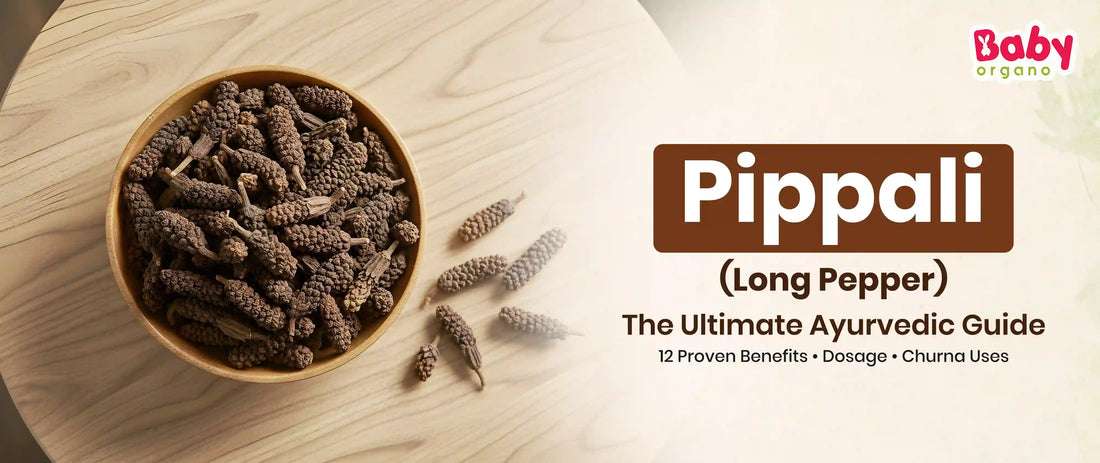
Pippali (Long Pepper): Benefits, Uses, Churna, Plant & Complete Ayurvedic Guide
Table of Contents
What Is Pippali? Introduction and Sanskrit Names
Pippali is the dried unripe fruit of the plant Piper longum Linn., a climbing vine belonging to the family Piperaceae the same plant family as black pepper (Piper nigrum). It is commonly known as Long Pepper in English and is one of the most important herbs in the entire Ayurvedic pharmacopeia.
The name Pippali itself is derived from Sanskrit and is believed to mean "to drink and to digest" - directly pointing to its two greatest benefits: improving digestion and enhancing the absorption of what we consume.
Other names for Pippali across languages:
Scientific classification:
Pippali Plant - Botanical Description and Where It Grows
Understanding the Pippali plant helps you identify authentic Pippali from market substitutes a real concern, as some sellers fraudulently substitute Piper cubeba or other species.
What the Pippali Plant Looks Like
Pippali is a slender, climbing perennial shrub that creeps along the ground and roots at its nodes. It is not a tree it is a vine-like plant that needs support to climb.
Leaves: Dark green, heart-shaped or oval, approximately 2 to 3 inches long with pointed tips. The upper surface is smooth and the lower surface is pale green.
Flowers: Pippali produces unisexual flowers — male and female flowers grow on separate plants. They appear during or just after the rainy season on straight, upright spikes. Male spikes are slim and 2.5 to 7.5 cm long. Female spikes are shorter, about 0.25 to 2 cm.
Fruit: The fruit is the most medicinally valuable part. It is slender, elongated, and resembles a small dark cone or spike, approximately 2.5 to 3.5 cm in length. The unripe fruit is green and turns black when dried. The surface of the fruit has a granular, bumpy texture. It is this dried, unripe fruit that is used as medicine and spice — this is what we call Pippali.
Roots: The roots, known as Pippali Mula, are also used in Ayurvedic medicine, particularly for respiratory and digestive conditions. They are different in their properties from the fruit and are discussed separately in classical texts.
Where Pippali Grows in India
Pippali is native to India and Southeast Asia. In India, it grows throughout:
- The sub-Himalayan tracts and central Himalayas, up to 1,800 meters altitude
- Assam, Khasi and Mikir hills in northeast India
- Lower hills of West Bengal
- Evergreen forests of the Western Ghats, from Konkan in Maharashtra to Kerala
- Car Nicobar Islands
The best quality Pippali is traditionally considered to come from the Magadha region (present-day Bihar) and Videha region, which is why two of its Sanskrit names, Magadhi and Vaidehi, reference these places directly. Today, commercial cultivation is concentrated in Kerala, Tamil Nadu, Andhra Pradesh, and parts of Odisha.
Pippali in Ayurveda - Rasa, Guna, Virya, Vipaka, and Dosha Action
In Ayurveda, every herb is characterized by specific qualities that determine how it acts in the body. Understanding these qualities helps explain why Pippali does what it does.
Rasa (Taste): Katu - Pungent
Guna (Physical qualities): Laghu (light), Tikshna (piercing/sharp)
Virya (Potency): Ushna - Hot
Vipaka (Post-digestive effect): Madhura - Sweet
This combination is what makes Pippali unique and powerful. Its hot potency (Ushna Virya) stimulates digestive fire and clears congestion. But its sweet post-digestive effect (Madhura Vipaka) is what makes it suitable for longer-term use and nourishing to the tissues - unlike many other hot herbs that deplete over time.
Dosha Action:
Karma (Actions) as per classical texts:
- Deepana - Kindling digestive fire (Agni)
- Pachana - Digestive
- Anulomana - Promotes proper movement of Vata downward
- Shwasahara - Relieves respiratory conditions
- Kasahara - Relieves cough
- Rasayana - Rejuvenating, anti-aging
According to the ancient Ayurvedic scholar Bhava Prakash, Pippali is classified in the Haritakyadi, Trikatu, and Panchakola categories, placing it among the most respected herbs in the Ayurvedic pharmacopeia.
Pippali Benefits - 12 Proven Health Benefits
1. Supports Digestive Health and Relieves Indigestion
Pippali is one of Ayurveda's strongest digestive herbs. It stimulates the secretion of Agni (digestive fire), which Ayurveda identifies as the root of all health. When Agni is strong, food is properly digested and nutrients are absorbed. When Agni is weak, undigested material called Ama accumulates and causes disease.
Pippali's Deepana (appetizer) and Pachana (digestive) properties directly kindle Agni, improve appetite, reduce bloating, relieve gas, and help with constipation. It is especially helpful for heaviness after meals and sluggish digestion associated with Kapha imbalance.
Practical use: 2-3 pinches of Pippali powder with honey after meals, twice daily, to manage indigestion and bloating.
2. Clears Respiratory Congestion and Supports Lung Health
Pippali is perhaps most celebrated in Ayurveda for its action on the respiratory system. It strengthens Pranavaha Srotas, the respiratory channels and is a core ingredient in almost every classical Ayurvedic formula for cough, asthma, bronchitis, and chest congestion.
Its hot and piercing qualities (Ushna and Tikshna) thin mucus, loosen congestion, and make it easier to expel. It acts as a natural expectorant, clearing phlegm from the lungs and nasal passages. Research published in PMC confirms the anti-inflammatory activity of Pippali, supporting its traditional use for respiratory conditions.
In classical Ayurveda, Pippali is the primary herb for Tamaka Shwasa (bronchial asthma) and is used in Sitopaladi Churna specifically for this purpose.
Practical use: Pippali with warm milk or honey for dry cough, cold, and chest congestion.
3. Enhances Bioavailability of Nutrients and Medicines
This is Pippali's most scientifically studied benefit. The primary bioactive compound in Pippali, piperine significantly enhances the bioavailability of other nutrients and medications.
Piperine inhibits certain drug-metabolizing enzymes in the liver and intestines, allowing more of a substance to enter circulation. This is why Pippali is combined with other herbs in Ayurvedic formulations it makes them work more effectively. It improves the absorption of curcumin from turmeric, for example, by up to 2,000%.
This bioavailability-enhancing property is so well established that piperine is now widely used in modern nutraceuticals.
4. Boosts Immunity as a Rasayana Herb
Pippali is classified as a Rasayana, a class of Ayurvedic herbs that are rejuvenating, anti-aging, and broadly immune-supporting. Regular use of Pippali in appropriate doses is said to strengthen Ojas, the ultimate essence of immunity and vitality in Ayurvedic understanding.
Animal studies evaluating Pippali Rasayana found it significantly activated macrophages, immune cells responsible for identifying and destroying pathogens, enhancing phagocytic activity. Rich in antioxidants, Pippali helps combat free radical damage that weakens the immune system over time.
5. Supports Healthy Metabolism and Weight Management
Pippali's heating quality stimulates metabolic rate and improves fat digestion, making it beneficial for Kapha-related weight gain and sluggishness. It enhances the digestive fire that burns stored fat and helps clear accumulated Ama (metabolic waste) from the system.
Practical use: 1/4 teaspoon of Pippali churna mixed with warm water and a small amount of honey, once daily on an empty stomach. This combination is traditionally used to improve fat metabolism.
6. Supports Liver Function and Detoxification
Pippali has significant hepatoprotective properties. Animal studies have shown it aids liver detoxification, improves bile flow (essential for fat digestion), and helps rejuvenate liver cells. It is a key ingredient in classical Ayurvedic formulations for liver conditions, including Guda Pippali, which is used extensively in liver disorders.
7. Provides Natural Anti-Inflammatory Relief
Pippali contains several bioactive compounds with proven anti-inflammatory properties, including piperine, piperlongumine, and other alkaloids. A study published in PMC specifically evaluating anti-inflammatory activity found that the Chhoti (small) variety of Pippali suppressed inflammation in both acute and sub-acute phases, making it effective for conditions like arthritis, joint pain, and general inflammation.
Clinical trials have also supported oral Pippali use for reducing arthritis-related swelling and pain.
8. Acts as a Natural Brain Tonic (Medhya)
Pippali is classified as a Medhya herb in Ayurveda, meaning it nourishes and strengthens the mind. It is considered beneficial for memory, concentration, and mental clarity. It helps combat mental fatigue and stress-related cognitive decline.
The ancient scholar Charaka mentions that Pippali "improves intelligence" (medhya) and acts as an aphrodisiac (vrishya), indicating its role in overall vitality and mental function.
9. Helps Manage Blood Sugar Levels
According to studies on Piper longum, Pippali has demonstrated anti-hyperglycemic activity in animal models. It activates insulin secretion from beta-pancreatic cells and helps reduce the breakdown of starch into glucose, contributing to better blood sugar management. It also shows anti-lipid peroxidative and antioxidant properties that support metabolic health broadly.
Note: These are research findings. Pippali should not replace prescribed diabetes medication without consulting a doctor.
10. Supports Reproductive Health and Vitality
Pippali is classified as Vrishya, an aphrodisiac and reproductive tonic in Ayurveda. It is used in classical formulations to improve fertility and vitality in both men and women. It nourishes the Shukra dhatu (reproductive tissue) and is used as part of rejuvenation protocols for overall vitality and longevity.
11. Relieves Menstrual Discomfort
Pippali helps manage menstrual disorders including dysmenorrhea (painful periods). According to Ayurveda, painful menstruation (Kashtaartava) involves aggravated Vata dosha. Pippali's Vata-balancing properties help ease cramps and discomfort. It improves circulation to the pelvic region and reduces the spasm-like pain associated with difficult menstruation.
12. Promotes Better Sleep
Because insomnia in Ayurveda is often associated with vitiated Vata dosha, Pippali's Vata-normalizing properties can support better sleep. Warm milk infused with a small amount of Pippali churna is a traditional remedy for restlessness and poor sleep quality, calming the nervous system and easing mental agitation.
What Is Pippali Churna? Uses and Benefits of Pippali Powder
Pippali Churna is the powdered form of dried Pippali fruit. It is the most commonly used and most accessible form of Pippali for home use.
The unripe Pippali fruits are harvested, dried in the sun or shade until fully dehydrated, and then ground into a fine powder. This churna (powder) retains all the bioactive compounds of the fruit primarily piperine and related alkaloids in a concentrated, easy-to-use form.
Key Uses of Pippali Churna
For Respiratory Health:
Mix 1/2 teaspoon of Pippali churna with honey and take twice daily. This is one of Ayurveda's most relied-upon remedies for dry cough, chronic cough, bronchitis, and mild asthma.
For Digestion:
Take 2-3 pinches of Pippali churna with honey after meals to relieve indigestion, bloating, gas, and loss of appetite.
For Immunity:
Mix 1/4 teaspoon with warm water or warm milk once daily. This general tonic use, especially in winter and during seasonal transitions, strengthens immunity and improves vitality.
For Weight Management:
Mix 1/4 teaspoon with warm water and a small amount of honey on an empty stomach in the morning.
For Toothache:
Make a paste of Pippali churna with honey and gently rub on the gums and affected teeth. Its Kapha-balancing and anti-inflammatory properties help reduce pain and inflammation.
For Hiccups:
Pippali churna with honey helps equalize Vata and clears obstruction in the gastrointestinal tract - traditionally used to relieve persistent hiccups.
Pippali Churna vs Pippali Rasayana
Pippali Churna is the simple dried powder, suitable for most general daily uses as described above.
Pippali Rasayana is a classical Ayurvedic formulation that combines Pippali powder with other herbs such as Shatavari, Bala, honey, and ghee in a specific process. This is a more concentrated, nourishing preparation used for deeper rejuvenation especially for lung health, post-illness recovery, chronic fatigue, and anti-aging purposes. Pippali Rasayana should be taken under the guidance of an Ayurvedic practitioner.
How to Use Pippali - Forms, Combinations, and Home Remedies
Available Forms
Classic Home Remedies Using Pippali
Pippali and Honey for Cough:
Mix 1/2 teaspoon of Pippali churna with one teaspoon of raw honey. Take twice daily after meals. This is one of Ayurveda's oldest and most effective remedies for cough and respiratory congestion.
Pippali Milk for Respiratory Health:
Add a small pinch (about 1/8 teaspoon) of Pippali churna to a glass of warm milk. Add a little honey if desired. Take once daily at bedtime. This is specifically useful for chronic respiratory conditions, dry cough, and to build lung strength after illness.
Pippali Tea (Decoction) for Congestion:
Boil 1/2 teaspoon of Pippali powder in 1.5 cups of water until it reduces to one cup. Strain, add honey, and sip warm. Take once daily. This is excellent for bronchitis, chest congestion, and clearing mucus.
Trikatu at Home:
Mix equal parts of Pippali powder, dry ginger (Sunthi) powder, and black pepper (Maricha) powder. Take 1/4 teaspoon of this mixture with warm water before meals for sluggish digestion, low appetite, and metabolic support. This is the home version of the classical Trikatu formula.
Pippali with Ghee for Joint Health:
Mix a small pinch of Pippali churna with one teaspoon of warm ghee. This combination is used in Ayurveda for joint stiffness, pain, and to enhance the absorption of fat-soluble nutrients.
Pippali Dosage - How Much to Take Per Day
Always begin with the lowest effective dose and increase only if needed. Pippali is a potent herb, more is not better.
Special populations:
Children: A very small dose, approximately 50 to 100 mg (a single fruit's worth of powder) once daily after meals. Always consult a practitioner before giving Pippali to children.
Elderly: Start with 125 mg to avoid excess heating or acidity. Increase slowly based on tolerance.
Pregnant women: Pippali should generally be avoided during pregnancy as it may stimulate uterine contractions. Use only if specifically prescribed by a qualified Ayurvedic doctor.
Important: Pippali is not recommended for continuous long-term use without proper Ayurvedic guidance. Classical texts state that without proper Panchakarma or Rasayana protocols, extended high-dose use can aggravate Pitta and Kapha doshas and cause unwanted effects.
Pippali Side Effects - Who Should Use Caution
Pippali is safe when used in appropriate doses and for appropriate durations. However, like all potent herbs, it requires respect and mindfulness.
Possible side effects from excess use:
- Acidity, heartburn, or burning sensation in the stomach
- Stomach irritation or gastric discomfort
- Increased Pitta, heat-related symptoms such as skin redness, irritability, or excess thirst
- Allergic reactions in sensitive individuals, skin rash, itching, swelling
- Diarrhea if taken in excess
Who should avoid or use Pippali with caution:
Important: Always consult a qualified Ayurvedic practitioner or your doctor before starting Pippali, especially if you are on any medications or have an underlying health condition.
Pippali vs Black Pepper - Key Differences
Many people assume Pippali is simply another name for black pepper. They are related but meaningfully different.
Both are ingredients in Trikatu Churna, a classical formula combining Pippali, Black Pepper, and Dry Ginger, where their complementary actions work together for digestion and metabolism.
Pippali in Classical Ayurvedic Formulations
Pippali is used in over 324 Ayurvedic formulations according to the Ayurvedic Formulary of India, more than almost any other single herb. Here are the most important ones:
Trikatu Churna: The most famous combination of Pippali, Black Pepper (Maricha), and Dry Ginger (Sunthi). Used for digestion, respiratory health, weight management, and metabolic support.
Sitopaladi Churna: Contains Pippali along with sugar candy, bamboo manna, cardamom, and cinnamon. One of Ayurveda's most trusted formulas for cough, cold, asthma, and chest congestion. Pippali is a key active ingredient.
Chyawanprash: India's ancient and best-known immunity-boosting herbal jam. Contains Pippali as one of its core ingredients, contributing its bioavailability-enhancing and respiratory-supportive properties.
Guda Pippali: Pippali combined with jaggery (Guda). Used extensively in liver disorders, anemia, respiratory conditions, and as a general tonic.
Pippali Rasayana: A classical rejuvenating preparation combining Pippali with multiple nourishing herbs. Used for chronic respiratory conditions, post-illness recovery, building lung strength, and anti-aging.
Trikatu Kwath: A decoction of the Trikatu combination, used for severe congestion, chronic respiratory conditions, and metabolic disorders.
Pippali FAQs - Common Questions Answered
1. What is Pippali in English?
Pippali is called Long Pepper in English. Its scientific name is Piper longum Linn. It is a different plant from black pepper (Piper nigrum), though they belong to the same family.
2. What are the main benefits of Pippali?
Pippali's main benefits are supporting digestive health, clearing respiratory congestion, enhancing the bioavailability of nutrients and medicines, boosting immunity as a Rasayana herb, supporting liver function, improving metabolism, and providing anti-inflammatory relief. It is particularly prized for lung health and rejuvenation.
3. What is Pippali churna used for?
Pippali churna (powder) is most commonly used for cough and respiratory congestion (mixed with honey), digestive issues like indigestion and bloating (taken after meals), immunity support (with warm milk or water), and weight management. It is the most accessible and versatile form of Pippali.
4. Can Pippali be taken daily?
Yes, in appropriate doses, Pippali can be taken daily. The standard adult dose is 0.5 to 1 gram per day (approximately 1/4 to 1/2 teaspoon of churna). However, very prolonged use in high doses is not recommended without Ayurvedic guidance, as it can aggravate Pitta dosha over time.
5. Is Pippali safe during pregnancy?
Pippali should generally be avoided during pregnancy as it may stimulate uterine contractions. It is used in postpartum care under guidance, but should not be taken during pregnancy unless specifically prescribed by a qualified Ayurvedic doctor.
6. Is Pippali the same as Thippili in Tamil?
Yes. Pippali (Sanskrit/Hindi) and Thippili (Tamil) refer to the same herb - Long Pepper (Piper longum).
7. What is the difference between Pippali and Pippali Mula?
Pippali refers to the fruit of the plant, while Pippali Mula refers to the root. Both are used in Ayurvedic medicine but have slightly different properties and applications. The root is commonly used for respiratory and digestive conditions and is sometimes preferred in specific formulations.
8. Can Pippali be used for babies or children?
In traditional practice, a minute amount of Pippali has been used to support respiratory health in infants - ground and mixed with breast milk. However, any use of Pippali for infants or young children should only be done under the specific guidance of a qualified Ayurvedic practitioner. Do not self-administer Pippali to young children.
Conclusion
Pippali is not just an ancient spice. It is one of Ayurveda's most versatile, deeply studied, and genuinely powerful medicinal herbs used in over 300 classical formulations for a reason.
Its primary strengths are supporting digestion, clearing the respiratory system, enhancing the effectiveness of other herbs through improved bioavailability, and acting as a Rasayana, a broad rejuvenating tonic that builds immunity, vitality, and longevity over time.
Pippali churna is the simplest way to access these benefits at home, a small amount with honey for cough and respiratory congestion, or with warm water after meals for digestion.
As with all potent Ayurvedic herbs: start with a small dose, observe how your body responds, and consult a qualified practitioner for conditions that are chronic or complex.
****This article is written by Dr. Rajshree Singhatiya (BAMS) and medically reviewed by Dr. Urvi Ashani (M.Pharm Ayurveda, Ph.D, R&D Head - 13+ years of experience) for informational purposes only. It does not constitute medical advice. Always consult a qualified Ayurvedic practitioner or doctor before using any herb for therapeutic purposes, especially if you are pregnant, nursing, or on any medications.****
Sources
-
Charaka Samhita - Classical Ayurvedic Text on Herbal Medicine
-
Ayurvedic Pharmacopoeia of India - Ministry of AYUSH, Government of India
-
Anti-inflammatory activity of two varieties of Pippali (Piper longum Linn) - PMC / National Institutes of Health
- Piper longum - Phytochemicals and Network Pharmacology - PLOS ONE
- Tags:
- Ayurveda
- Ayurvedic Herbs
- Baby Care
- Baby Growth
- Digestive Health
- Herbal Remedies
- Immunity
- Long Pepper
- Parenting tips
- Pippali
- Respiratory Health


:%20Benefits,%20Uses,%20Churna,%20Plant%20%26%20Complete%20Ayurvedic%20Guide)