 Skip to content

How to Improve Baby Hair Growth Naturally: Science-Backed Tips + Ayurvedic Wisdom
- Written by Baby Organo
- 9 min read
- Expert Medically Reviewed by Dr. Urvi Ashani, M.Pharm (Ayurveda), Ph.D | R&D Head, BabyOrgano | 13+ Years Experience in Pediatric Ayurvedic Care
Table of Contents
Understanding Baby Hair: The Biology Every Parent Should Know
Before jumping into tips, it helps to understand what is actually happening on your baby's scalp. This science-backed foundation will save you many moments of unnecessary worry.
Three Types of Hair Your Baby Will Have
Most babies are born with vellus hair. As they grow, terminal hair naturally takes over — this is completely independent of shaving, oiling, or any external treatment. The timeline is set by genetics.
The Hair Growth Cycle
Every single hair on your baby's scalp goes through three phases:
-
Anagen (Growth Phase): Active growth. In a healthy scalp, about 85–90% of hair follicles are in this phase at any time.
- Catagen (Transition Phase): A short 3–6 week phase of programmed rest.
- Telogen (Resting/Shedding Phase): The hair stops growing and eventually falls out, making way for new growth.
Understanding this cycle explains why hair falls out and comes back, it is not damage, it is design.
Why Your Baby Is Losing Hair at 3 Months (And Why It's Normal)
One of the most common fears for new parents is watching a previously hairy baby go partially or completely, bald by month 2 or 3. Here is the science behind it so you can relax.
Telogen Effluvium: The 3-Month Shed
After birth, falling maternal hormones trigger a process called telogen effluvium, essentially a planned "shedding reset." This leads to visible newborn hair loss between 2 and 3 months, followed by a burst of new hair growth. It's perfectly common, but can be disconcerting to watch a once-hairy baby temporarily go bald.
In simple terms: during pregnancy, high hormone levels keep more hair in the growth phase for longer. After delivery, hormone levels drop sharply — for both mother and baby. This sudden shift pushes a large number of hair follicles from the growth phase directly into the resting (telogen) phase. Weeks later, those hairs shed all at once.
The fluctuating hormones that trigger this hair loss are a natural part of the growth process. Normal baby hair loss will not bother your baby in any way — they won't even feel it.
Friction Alopecia: The Hidden Cause of Bald Patches
Hormonal shedding is not the only type of hair loss in infants. Babies spend a lot of time on their back and tummy until they can sit up. Repeated contact with surfaces may lead to friction, which, if severe enough, could cause hair loss — called friction alopecia or pressure alopecia.
This is why bald spots almost always appear at the back of the head — exactly where a baby's head rests against the mattress, car seat, or bouncer.
The good news: Hair grows back once the baby starts sitting up. No special treatment is needed.
When to Be Concerned
Most baby hair loss is completely normal. However, consult your paediatrician if you notice:
- Circular, patchy bald spots (possible ringworm / tinea capitis)
- Redness, flaking, or scaling on the scalp
- Hair loss accompanied by other symptoms like lethargy or poor weight gain
- No signs of regrowth after 6 months
The Tummy Time Secret: Preventing Baby Bald Spots
This is one of the most important and most underappreciated tips for baby hair care — and most Indian parenting blogs skip it entirely.
Tummy time is the single best way to prevent the back of the head from flattening and balding. Start practicing tummy time as soon as you bring your baby home. It relieves pressure on the back of the scalp and strengthens the neck and shoulder muscles.
How to Do Tummy Time Safely
- Begin with 2-3 minutes, 2-3 times per day immediately after birth (always when baby is awake and supervised)
- Gradually increase to 20-30 minutes per day by 3-4 months
- Use a rolled towel under baby's chest for support if needed
- Always put baby to sleep on their back - tummy time is only for supervised awake periods
Additional Friction-Reduction Tips
-
Alternate head position: According to paediatrician Eboni Hollier, alternating your baby's head from either side during sleep to distribute the pressure more evenly can prevent hair loss and also stop your baby's head from becoming flat in one area.
-
Flip crib orientation: Babies naturally turn their head toward the door or light source. Rotating the crib placement every few days encourages them to turn in different directions, reducing repeated pressure on one spot.
-
Use a soft fabric: Rough cotton fibres create more friction than smooth surfaces. Consider a silk or bamboo pillowcase for the bassinet mattress cover.
- Limit time in bouncers and car seats when not travelling.
Tips for Increasing Baby Hair Growth Naturally
Now let's get into the practical, proven tips, enhanced with Ayurvedic wisdom and supported by science.
Use the Right Ayurvedic Hair Oil
Not all baby hair oils are the same. Coconut oil is the most commonly recommended, and for good reason, it is rich in antioxidant Vitamin E and has been shown in research to reduce protein loss from the hair shaft when used as a pre-wash treatment. But it is just the beginning.
Coconut Oil (Narikela Taila): Penetrates the hair shaft deeply, reduces protein loss, moisturises the scalp, and helps loosen cradle cap (seborrheic dermatitis). Choose cold-pressed, organic, extra-virgin coconut oil, not refined or fragrance-added versions.
Why a Multi-Oil Blend is Superior:
A baby hair oil that combines these ingredients - like BabyOrgano's Ayurvedic Baby Hair Oil, nourishes the scalp far more comprehensively than any single-ingredient oil.
How to Apply:
- Take a small amount of warm oil in your palm
- Apply gently to the scalp in sections
- Leave on for at least 20-30 minutes before bath (or overnight)
- Wash off with a mild, sulfate-free baby shampoo
Patch Test First: Always test any new oil on a small area of baby's inner arm and wait 24 hours before applying to the full scalp.
Give Regular Scalp Massages
A scalp massage does more than feel good, it works at a physiological level. Gentle circular massage increases blood circulation to the hair follicles, delivering more oxygen and nutrients directly to the root.
How to massage:
- Use your fingertips (not nails) in small, gentle circular motions
- Cover the entire scalp, including the crown, sides, and nape
- Massage for 5-10 minutes, 3-4 times per week
- Best time: before bath or at bedtime
- Lay baby on a soft towel on a flat surface
Regular massage before bedtime also helps settle the baby and can improve sleep quality, a dual benefit.
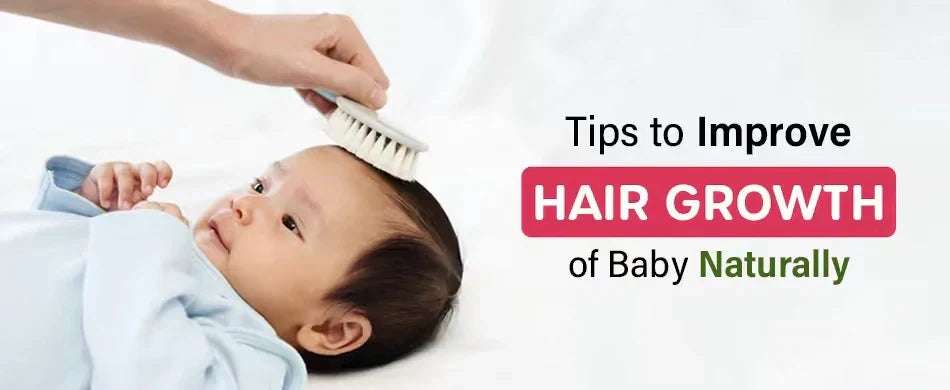
Brush Hair Gently and Regularly
Use a soft-bristled baby brush (natural bristles preferred) and brush gently every 2 days. Brushing:
- Distributes natural scalp oils
- Stimulates blood circulation
- Helps loosen cradle cap flakes
- Prevents knot formation
Avoid: Tight hair clips, bows, or rubber bands on fine baby hair. These create tension on fragile follicles and can cause traction alopecia over time.
Maintain a Regular Hair Wash Routine
Keep the scalp clean to prevent buildup that can block follicles and slow growth.
-
Newborn phase (0-6 weeks): Once every 7 days is sufficient
-
After 6 weeks: Increase to every 2-3 days
- Use lukewarm water - not hot
- Use a mild, sulfate-free, tear-free baby shampoo
- Over-washing can strip natural oils, so washing two to three times a week is sufficient unless the hair becomes dirty more frequently.
Use a Baby-Specific Conditioner
After shampooing, apply a baby-safe, tear-free conditioner to retain moisture and reduce breakage:
- Leave on for 1-2 minutes before rinsing
- Especially important for babies with curly, coily, or textured hair
- Rinse thoroughly with warm water
Apply Aloe Vera Gel
Aloe vera is one of Ayurveda's most trusted scalp healers. It contains enzymes that support hair follicle health and has natural moisturising and antimicrobial properties.
How to use:
- Extract fresh gel from an aloe vera plant, or use a pure baby-safe aloe vera gel
- Apply a small amount to the scalp, avoiding eyes and mouth
- Leave for 10 minutes, then rinse with lukewarm water
- Do a patch test 24 hours before first use
Choose Baby-Safe Hair Care Products
Adult shampoos and conditioners are formulated for adult scalps — they contain harsh sulfates, fragrances, and preservatives that are not suitable for a baby's thin, permeable skin.
Always look for products that are:
-
Sulfate-free (no SLS or SLES)
-
Paraben-free
-
Hypoallergenic and dermatologically tested
-
Free from artificial fragrance
- Specifically formulated for infants (0-2 years)
Detangle with Care
As hair grows, tangles are inevitable. Here's how to detangle without causing breakage:
- Apply a detangling spray or conditioner to damp hair
- Divide hair into small sections
- Start from the tips and work your way up toward the roots
- Use a wide-tooth comb or a soft baby brush
- Keep baby occupied with a toy or song during the process
Handle Hair Gently After Bath
After washing, pat, do not rub - baby's hair dry with a soft microfibre or muslin towel. Rubbing stresses fragile wet follicles and leads to breakage. Let hair air-dry whenever possible; never use a hair dryer on infant hair.
Never Tie Hair Tightly
If your baby has longer hair, avoid tight ponytails, braids, or buns. The constant pulling can damage follicles and cause traction alopecia. Use:
- Loose scrunchies
- Soft fabric headbands
- Silk hair ties
Apply a small amount of BabyOrgano Hair Oil or conditioner to manage curls and flyaways without resorting to tight styling.
Nutrition for Baby Hair Growth: What Mothers & Babies Need
Hair growth starts from the inside. No amount of external oil can compensate for nutritional deficiency. Here is what the science says.
For Breastfeeding Mothers
What you eat directly affects the nutrients in your breast milk, and therefore your baby's hair follicle health.
Breastfeeding mothers can include butternut squash, mango, carrots, and pumpkin in their diet, foods rich in Vitamin A. Whole grains, potatoes, beans, and eggs provide B vitamins. Biotin (Vitamin B-7) is needed for healthy hair and nail growth. Leafy green vegetables contain iron, which stimulates hair growth by bringing oxygen and nutrients to the follicles.
AAP Recommendation: The American Academy of Pediatrics recommends that breastfed infants receive supplemental Vitamin D. Breastfed babies also need iron supplementation starting at 4 months, as iron reserves from birth become depleted as growth increases. Always consult your paediatrician before starting any supplement.
For Babies Starting Solids (4–6 Months Onwards)
Once your paediatrician gives the go-ahead for solids:
- Start with iron-fortified cereals
- Introduce pureed vegetables rich in Vitamin A (sweet potato, carrot, pumpkin)
- Offer mashed legumes (dal) for protein and iron
- Add mashed avocado for healthy fats
- Introduce pureed fruits like mango and papaya
Never give honey, cow's milk as a main drink, or whole nuts to babies under 12 months.
Ayurvedic Seasonal Hair Care: Summer vs Winter Oiling
Ancient Ayurvedic wisdom, called Ritucharya (seasonal regimen), teaches us that the oils we use should align with the seasons. This is something no modern competitor covers, and it is a genuine differentiator for BabyOrgano's philosophy.
Practical tip for Indian parents:
In peak Indian summers (April-June), massage with coconut oil in the morning and wash off before noon to prevent the scalp from overheating under the oil.
In winters (December–January), a castor-oil-based massage left on overnight deeply nourishes the scalp and prevents the Vata-aggravated dryness common in cold, dry weather.
Ayurvedic Ingredient Dictionary
Understanding what's in your baby's hair oil builds trust and empowers you to make informed choices. Here is a quick reference guide:
Bhringraj (Eclipta Alba) — "Kesharaj" / King of Hair
- Increases blood circulation to the scalp
- Shown in traditional use to support hair density and reduce premature greying
- Pacifies Vata and Kapha doshas
Brahmi (Bacopa Monnieri)
- Calms the nervous system (stress is a major driver of hair loss, even in babies from maternal stress during pregnancy)
- Nourishes hair roots and supports follicle health
- Best combined with coconut oil as a carrier
Amla (Indian Gooseberry)
- Exceptionally rich in natural Vitamin C
- Strengthens hair follicles and promotes healthy growth
- Prevents premature greying and dryness
Neem (Azadirachta Indica)
- Powerful natural antimicrobial and antifungal
- Protects the scalp from infections like cradle cap and ringworm
- Soothes scalp inflammation
Sesame Oil (Tila Taila)
- Base oil of choice in classical Ayurvedic hair care
- Rich in fatty acids; improves circulation and prevents scalp dryness
- Warm-natured; ideal for winter use
Coconut Oil (Narikela Taila)
- Penetrates hair shaft deeply; reduces protein loss
- Cooling in nature; ideal for summer
- Moisturises scalp; helps manage cradle cap
Hair Care by Texture: Straight, Wavy, Curly & Coily
Every baby's hair texture is different, and a one-size-fits-all routine does not work. Here is how to adapt care to your baby's natural hair type:
Straight or Wavy Hair
- Generally lower maintenance
- Brush every 2 days with a soft bristle brush
- Shampoo 2–3 times a week
- Lightweight coconut or sesame oil works well
- Conditioner once a week is usually sufficient
Curly or Coily Hair (Common in South Indian, African-heritage, and mixed-heritage babies)
- Moisture is the priority - curly hair is naturally drier because scalp oils travel down the curl shaft more slowly
- Shampoo only 1-2 times per week to avoid stripping natural oils
- Use a rich conditioner or a leave-in detangling spray after every wash
- Apply oil while hair is slightly damp to lock in moisture
- Never brush dry - only detangle when wet and conditioned, using fingers or a wide-tooth comb
- Use a Brahmi or castor oil blend for extra nourishment
- Avoid tight braiding or pulling styles
Mundan Ceremony vs. Modern Science: Myths Busted
The Mundan (head-shaving ceremony) is one of the 16 sacred Shodasha Samskaras in Hindu tradition - a deeply meaningful ritual believed to cleanse negative karma from past lives and support the child's mental and spiritual development. It is a beautiful cultural practice.
But many Indian parents also believe Mundan makes hair grow back thicker and denser. Let's look at what science actually says:
The Scientific Truth
The scientific consensus is that shaving a baby's head does not alter the fundamental characteristics of their hair. Shaving only cuts the hair shaft at the skin's surface and has no biological effect on hair growth, density, or thickness. Hair properties like colour, thickness, and speed of regrowth are primarily determined by genetics, not by external cutting methods.
Hair grows from the follicle, which is deep within the dermis layer of skin. A razor blade never reaches it. The follicle size — and therefore hair thickness — is genetically determined.
Why Hair Appears Thicker After Mundan
When you shave your baby's head, you remove the fine baby (vellus) hair, and the "mature" (terminal) locks start to appear earlier than they may have if left to Mother Nature. The changes in colour and texture can be significant or minor.
In other words, the timing of Mundan often coincides naturally with the transition from vellus to terminal hair — which happens regardless of shaving. Parents observe thicker hair growing back and attribute it to the shaving, when in reality, it would have happened anyway.
One Genuine Benefit of Mundan
It's common for babies to have uneven hair on their heads. Shaving is the best way to remove uneven hair and replace it with more even (uniform) hair growth. So while Mundan does not make hair thicker or healthier, it does create a uniform starting point — which is why it often looks better afterward.
Mundan Safety Tips
- Wait until the baby's skull is firm and they can hold their head steady (usually after 6 months)
- Always use sterilised equipment
- Clean the scalp before and after with a baby-safe antiseptic
- Moisturise the shaved scalp immediately after to prevent dryness
- If doing at home, use a hair trimmer (not a razor) for safety
When to See a Doctor
Visit your paediatrician or a paediatric dermatologist if you notice:
-
Circular bald patches - may indicate ringworm (tinea capitis), which requires antifungal treatment
-
Complete loss of eyebrows and eyelashes alongside scalp hair - possible alopecia areata
-
Scaly, crusted, or very inflamed scalp - may be severe cradle cap or a skin condition
-
Hair loss with delayed milestones, poor growth, or excessive fatigue - may indicate an underlying thyroid or nutritional issue
- No hair regrowth 6+ months after normal shedding
Never self-diagnose or self-treat these conditions. Early professional assessment gives the best outcomes.
Frequently Asked Questions (FAQs)
1. Is it normal for my newborn baby to be born completely bald?
Yes, absolutely. Hair quantity at birth is entirely determined by genetics. Some babies are born with a thick head of hair; others arrive with just a few wisps or none at all. Both are perfectly normal. Hair will grow in its own time, usually filling in by 6-12 months, though some children take up to 2-3 years.
2. Why is my baby losing hair at 2–3 months?
This is telogen effluvium - a natural and temporary hair-shedding process triggered by the drop in maternal hormones after birth. Most baby hair loss is completely normal. It's usually due to a simple fluctuation in hormones or friction during sleep and is nothing more serious than that. New hair will grow back within a few months.
3. When should I start oiling my baby's hair?
You can begin gentle scalp massage with a baby-safe Ayurvedic oil (like BabyOrgano Baby Hair Oil) from the first few weeks of life. Always do a patch test first and consult your paediatrician if your baby was premature or has any skin sensitivity.
4. Does shaving my baby's head (Mundan) really make hair grow thicker?
No, this is a widely believed myth. Science is clear: shaving does not affect the hair follicle and therefore cannot change the thickness, density, or texture of regrowth. Hair appears thicker because the natural transition from fine baby hair (vellus) to thicker hair (terminal) happens around the same time as the Mundan ceremony. Mundan is a meaningful cultural ritual, but it is not a hair growth treatment.
5. Can cradle cap (seborrheic dermatitis) slow down hair growth?
Yes, it can. Thick cradle cap buildup can clog hair follicles and create an unhealthy scalp environment. Regular gentle washing, soft brushing, and applying coconut or Ayurvedic oil to loosen flakes before bathing helps manage it effectively. Severe or persistent cradle cap should be reviewed by a paediatrician.
6. How often should I wash my baby's hair?
For newborns (0-6 weeks): once a week is enough. After 6 weeks, increase to every 2-3 days using a mild, sulfate-free, tear-free baby shampoo and lukewarm water. Overwashing strips natural scalp oils and can cause dryness.
7. Does hair texture change as babies grow?
Yes, often significantly. The fine vellus hair babies are born with is gradually replaced by terminal hair during the first 1-2 years. Colour, texture, and curl pattern can all change during this transition. Some babies born with straight hair develop curls, and vice versa.
8. Can tummy time actually help with hair growth?
You may be able to help reduce hair loss from friction by giving your baby more tummy time, but always put them to sleep on their backs until they turn 1 and they can reliably roll over by themselves. Tummy time reduces scalp friction that causes bald spots, and is one of the most practical things parents can do.
Key Takeaways
-
Baby hair loss at 2–3 months is normal - it is called telogen effluvium, caused by the natural post-birth drop in hormones, and reverses on its own.
-
Bald spots at the back of the head are typically friction alopecia - not a health concern. Tummy time and alternating head position are the best preventions.
-
Genetics determines your baby's hair quantity, thickness, and texture. No oil, shampoo, or practice can override this, but the right care supports your baby's full genetic potential.
-
Ayurvedic multi-herb oils (Brahmi, Bhringraj, Amla, Sesame, Coconut) provide the most comprehensive scalp nourishment, superior to any single-ingredient oil.
-
Nutrition matters deeply - a breastfeeding mother's intake of iron, biotin, Vitamin A, Vitamin D, and protein directly supports her baby's hair follicle health.
-
Seasonal oiling based on Ayurvedic Ritucharya (coconut in summer, castor/sesame in winter) adapts care to your baby's changing needs.
-
Mundan does not grow thicker hair - science is clear on this. It is a meaningful cultural ceremony, not a hair treatment.
-
Curly/coily hair needs extra moisture, less frequent washing, and no dry brushing.
-
Always choose baby-specific, sulfate-free, hypoallergenic products - adult products are not suitable for infant scalps.
- See a doctor if you notice circular bald patches, scalp infections, or hair loss accompanied by other symptoms.
A final word from our Ayurvedic expert:
"Baby hair is like a seed - it grows best when the soil (scalp), water (nutrition), and sunlight (care routine) are all right. No single tip works in isolation. A holistic approach - nourishing oil, gentle massage, a clean scalp, proper nutrition, and unconditional patience, will give your child the best foundation for healthy hair throughout their life."
Dr. Urvi Ashani, M.Pharm (Ayurveda), Ph.D | R&D Head, BabyOrgano
Also Read:
Five Natural Ways for Baby Hair Care
Complete Guide to Baby Scalp Massage: Technique & Benefits
How to Choose the Right Baby Hair Oil for Your Child's Hair Type
Cradle Cap: What It Is, How to Treat It Naturally
References:
1. Hughes EC, Syed HA, Saleh D. Telogen Effluvium. StatPearls. NIH. Updated May 2024.
2. American Academy of Pediatrics (AAP). Vitamin D & Iron Supplements for Babies. HealthyChildren.org.
3. Seattle Children's Hospital. Hair Loss in Children. seattlechildrens.org.
4. Heloa. Baby Hair: What's Normal, Expert Care, and Healthy Growth Tips. heloa.app. May 2025.
5. MomLovesBest. Infant Hair Loss: Is Your Baby Going Bald? December 2025.
Final Thoughts on Nurturing Your Baby's Hair
Navigating your baby's hair growth journey requires a lot of patience, routine, and the right care.
At BabyOrgano, we believe that a calm mind starts with a healthy, comfortable body—from their tiny toes to the crown of their head. We bridge ancient wisdom with modern safety to bring you premium ayurvedic baby care products and natural kids care products. Crafted with 100% pure herbs like Bhringraj, Brahmi, and Amla, our toxin-free formulations are recommended by parents to support your child’s healthy growth naturally. Visit our homepage to explore our safe, chemical-free collection designed to keep your little one happy, comfortable, and thriving.
- Tags:
- Parenting tips


